Best Entrepreneurship Books 2026

- PublishedAugust 5, 2026
Building a successful business requires more than a great idea. Entrepreneurs need practical knowledge about planning, finance, marketing, leadership, operations, and decision-making. While online courses, podcasts, and videos provide valuable insights, books remain one of the most reliable ways to develop a structured understanding of entrepreneurship.
Whether you are launching your first startup, growing a family business, or improving your management skills, the right business book can help you avoid common mistakes, think strategically, and make better decisions. Many successful founders and business leaders regularly recommend reading because books allow you to learn from years of experience in a fraction of the time.
This guide compares five well-known entrepreneurship and business management books that cover different aspects of building and running a business:
- Entrepreneurship Essentials You Always Wanted To Know – an introduction to entrepreneurship, innovation, and business management.
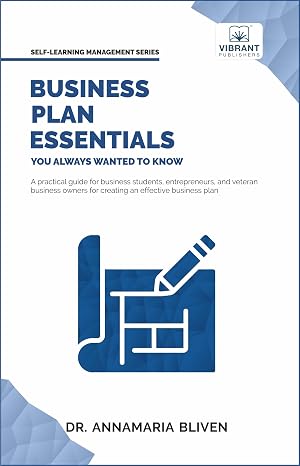
- Business Plan Essentials You Always Wanted To Know – a practical guide to writing business plans, analyzing markets, and creating financial projections.
- Harvard Business Review Entrepreneur’s Handbook – a comprehensive resource covering the journey from launching a business to scaling it effectively.
- Cost Accounting and Management Essentials You Always Wanted To Know – focused on managerial accounting, cost analysis, and decision-making.
- The E-Myth Revisited – a classic book that explains why many small businesses struggle and how systems can help businesses grow sustainably.
Rather than recommending a single “best” book for everyone, this article explains the strengths of each title, who it is best suited for, and how they compare across key areas such as readability, business planning, financial management, leadership, and long-term growth.
By the end of this guide, you will have a clear understanding of which book aligns with your experience level, learning objectives, and entrepreneurial goals.
Entrepreneurship Essentials You Always Wanted To Know

What Is This Book About?
Entrepreneurship Essentials You Always Wanted To Know is designed as an accessible introduction to entrepreneurship for readers who want to understand the fundamentals of starting and managing a business. Instead of assuming prior business knowledge, it explains core concepts in a structured, beginner-friendly way.
The book covers the entrepreneurial journey—from identifying opportunities and validating business ideas to understanding customers, building a business model, managing operations, and adapting to competitive markets. Its self-learning format makes it particularly useful for readers who prefer learning at their own pace.
Rather than focusing only on theory, the book aims to connect business concepts with practical decision-making that entrepreneurs face in everyday situations.
This book is a strong fit for readers who are building foundational business knowledge, including:
- Aspiring entrepreneurs preparing to launch their first business
- Students studying entrepreneurship or business management
- Freelancers planning to expand into a business
- Small business owners seeking a structured overview of business fundamentals
- Professionals exploring entrepreneurship as a career path
- Anyone interested in understanding how businesses are created and managed
It may be less suitable for experienced entrepreneurs looking for advanced topics such as venture capital, mergers and acquisitions, or complex corporate finance.
Business Plan Essentials You Always Wanted To Know
What Is a Business Plan?
A business plan is a structured document that explains what your business is, what it intends to accomplish, how it will achieve its objectives, and how it will remain financially sustainable. It acts as a roadmap for entrepreneurs, investors, lenders, and business partners by outlining the company’s mission, market opportunity, operations, marketing strategy, financial forecasts, and long-term vision.
The book Business Plan Essentials You Always Wanted To Know emphasizes that a business plan is much more than a document prepared to obtain funding. It is a strategic management tool that helps entrepreneurs organize ideas, validate assumptions, minimize risks, and make informed decisions throughout the life of the business.
Whether you are launching a startup, expanding an existing company, or seeking investment, a well-prepared business plan increases clarity, improves decision-making, and provides measurable goals.
Many entrepreneurs believe that having a great idea is enough to build a successful business. However, research and real-world experience show that businesses with documented plans are generally more likely to achieve sustainable growth because they define objectives, identify challenges, and establish clear action steps.
A business plan helps entrepreneurs:
- Define their business goals clearly.
- Understand their target market.
- Analyze competitors.
- Estimate startup and operating costs.
- Forecast future revenue.
- Prepare for risks and uncertainties.
- Secure loans or investment.
- Align team members around shared objectives.
- Measure progress through key performance indicators (KPIs).
- Adapt strategies as market conditions change.
Without a business plan, businesses often rely on assumptions instead of evidence, increasing the likelihood of costly mistakes.
Harvard Business Review Entrepreneur's Handbook

What Is a Business Plan?
Every successful business begins with an entrepreneur who sees opportunities where others see problems. The Harvard Business Review Entrepreneur’s Handbook emphasizes that entrepreneurship is not simply about having a great idea—it’s about cultivating the mindset required to identify opportunities, navigate uncertainty, and create long-term value.
Unlike many motivational books, this handbook treats entrepreneurship as a discipline that can be learned, practiced, and improved over time.
Many first-time founders believe they need a revolutionary idea to succeed. The handbook challenges this assumption by explaining that successful businesses often emerge from solving everyday problems more effectively than existing solutions.
Examples include:
- Making a complicated process simpler
- Reducing costs for customers
- Saving people time
- Improving convenience
- Delivering better customer service
- Creating a superior user experience
Cost Accounting and Management Essentials You Always Wanted To Know

Why Cost Accounting Matters
Accounting is often seen as one of the most intimidating areas of business. Many students, entrepreneurs, and managers struggle to understand financial reports, costing methods, and managerial decision-making because traditional textbooks tend to emphasize technical definitions over practical application.
Cost Accounting and Management Essentials You Always Wanted To Know takes a different approach. It simplifies complex accounting concepts into clear, practical lessons that help readers understand not only how accounting works but also why it matters in everyday business decisions.
Whether you’re preparing for exams, managing a business, or making pricing decisions, this book aims to bridge the gap between accounting theory and real-world business management.
Every business incurs costs. The ability to identify, measure, analyze, and control these costs directly influences profitability and long-term success.
Cost accounting helps organizations answer questions such as:
- How much does it really cost to manufacture a product?
- Which services generate the highest profit?
- Where is money being wasted?
- Should production be outsourced?
- Is a customer segment profitable?
- What price should be charged for maximum profitability?
Without accurate cost information, managers may make decisions based on assumptions rather than facts.
The E-Myth Revisited

About the Author
Michael E. Gerber is a business author, speaker, and entrepreneur best known for developing the E-Myth philosophy. Through decades of consulting with small businesses, Gerber observed recurring patterns that prevented companies from scaling successfully.
His work focuses on helping entrepreneurs create systems, document processes, and build businesses that can operate efficiently without depending entirely on the owner.
According to Gerber, failure usually isn’t caused by a lack of effort. Most entrepreneurs work extremely hard.
Instead, businesses struggle because owners become trapped in day-to-day operations, leaving little time for planning, marketing, hiring, improving systems, or strategic growth.
Common reasons include:
- No documented processes
- Poor delegation
- Inconsistent customer experience
- Weak financial management
- Lack of long-term planning
- Owner dependency
- Limited scalability
The book encourages founders to design businesses that can function consistently, even when the owner isn’t personally involved in every task.
Frequently Asked Questions
1. What is The E-Myth Revisited about?
The E-Myth Revisited explains why many small businesses fail and teaches entrepreneurs how to build scalable businesses using systems, processes, and strategic management rather than relying solely on hard work.
2. What does “E-Myth” mean?
“E-Myth” stands for Entrepreneurial Myth, the mistaken belief that being skilled at a technical job automatically means you can successfully run a business.
3. Who wrote The E-Myth Revisited?
The book was written by Michael E. Gerber, a renowned business consultant, entrepreneur, and author known for helping small business owners create scalable companies.
4. Is The E-Myth Revisited worth reading?
Yes. It remains one of the most influential business books because its lessons on systems, delegation, and business management are timeless and applicable to businesses of all sizes.