


Whether you’re launching your first startup, leading a growing company, preparing for an MBA, learning technical analysis, or managing a family business, choosing the right business book can accelerate your learning and improve your decision-making.
The five books featured in this guide represent different but equally important areas of modern business:
- Executive communication
- Financial market analysis
- Family business management
- Operations improvement
- Personal leadership and purpose
Rather than focusing on one discipline, this comparison helps readers identify the best book for their current goals.
Every recommendation has been evaluated based on:
- Practical value
- Readability
- Long-term relevance
- Business insights
- Real-world application
- Overall value for money
Whether you’re a student, entrepreneur, manager, investor, consultant, or executive, this guide will help you choose the book that best matches your needs.
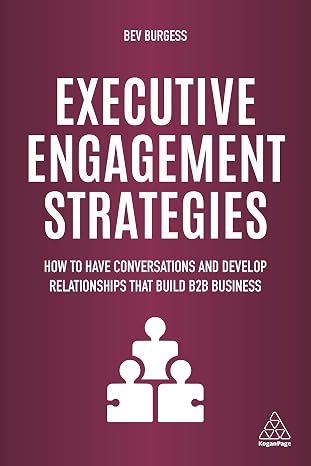
Executive Engagement Strategies

Book Overview
For professionals working in B2B sales, enterprise account management, consulting, customer success, and business development, Executive Engagement Strategies focuses on one of the most valuable skills in modern business: building meaningful relationships with senior decision-makers.
Unlike books that emphasize sales scripts or closing techniques, this title concentrates on earning executive trust, having productive business conversations, and developing long-term partnerships that can create sustainable business opportunities.
Whether you’re selling software, professional services, manufacturing solutions, or enterprise technology, the ability to communicate effectively with executives is often just as important as product knowledge.
This book explores how professionals can improve conversations with senior executives by focusing on business outcomes rather than product features.
It encourages readers to:
- Understand executive priorities
- Build credibility
- Ask better questions
- Develop trust
- Maintain long-term relationships
Instead of treating sales as a one-time transaction, it promotes a partnership-oriented mindset.
Technical Analysis of the Financial Markets


Book Overview
When discussing the most influential books on technical trading, Technical Analysis of the Financial Markets by John J. Murphy is consistently regarded as one of the foundational references for traders, investors, analysts, and finance students.
Originally published decades ago and updated through later editions, this book has remained relevant because it focuses on core principles of technical analysis rather than short-lived trading strategies. Instead of promising guaranteed profits or “secret indicators,” Murphy explains how traders can interpret price action, market trends, chart patterns, volume, momentum, and market psychology.
Whether you’re interested in stocks, ETFs, commodities, futures, forex, or other financial markets, the concepts introduced in this book provide a strong educational foundation for understanding technical analysis.
This book explains the principles of technical analysis by exploring how market participants analyze historical price and volume data to identify trends and potential trading opportunities.
Major topics include:
- Chart analysis
- Trend identification
- Technical indicators
- Candlestick patterns
- Market cycles
- Volume analysis
- Risk management
- Intermarket relationships
Rather than promoting a single trading system, the author provides readers with a broad framework for understanding market behavior.
Entrepreneurial Family Businesses


Book Overview
Family-owned businesses account for a significant share of companies worldwide, yet they face unique challenges that differ from startups or publicly traded corporations. Entrepreneurial Family Businesses: Innovation, Governance, and Succession explores these challenges by examining how family firms can remain innovative while balancing ownership, leadership, governance, and generational succession.
Published as part of the Springer Texts in Business and Economics series, this book adopts an academic yet practical approach. Rather than offering motivational advice, it discusses research-backed frameworks, case studies, and management concepts that help explain how successful family businesses evolve over time.
For students of business, family business owners, consultants, and researchers, this book provides valuable insights into one of the most important—and often overlooked—areas of entrepreneurship.
This book examines how entrepreneurial family businesses can remain competitive across generations while maintaining effective governance and encouraging innovation.
Major topics include:
- Family business models
- Innovation strategies
- Corporate governance
- Ownership structures
- Succession planning
- Leadership transitions
- Long-term sustainability
The discussion combines academic research with practical examples, helping readers understand both theoretical concepts and real-world business challenges.
The Goal


Book Overview
Few business books have influenced operations management as profoundly as The Goal: A Process of Ongoing Improvement by Eliyahu M. Goldratt and Jeff Cox.
Unlike traditional management textbooks filled with theories and diagrams, The Goal teaches business concepts through a compelling fictional story. By following the journey of a manufacturing plant manager facing operational and personal challenges, readers learn practical lessons about productivity, bottlenecks, systems thinking, and continuous improvement.
The book introduces the Theory of Constraints (TOC), a management philosophy that has influenced manufacturing, supply chain management, project management, healthcare, software development, and many other industries.
Its combination of storytelling and practical business thinking has made it one of the most recommended books for managers, entrepreneurs, engineers, MBA students, and business leaders.
The Goal follows the story of Alex Rogo, a plant manager whose factory is struggling with delays, inefficiency, and financial pressure.
As the story develops, readers discover how identifying and managing system constraints can transform organizational performance.
Major topics include:
- Theory of Constraints
- Bottleneck management
- Productivity
- Continuous improvement
- Manufacturing operations
- Process optimization
- Leadership
- Decision-making
Although set in a manufacturing environment, the ideas extend far beyond factories.
How Will You Measure Your Life?


Book Overview
Among leadership and personal development books, How Will You Measure Your Life? by Clayton M. Christensen, with James Allworth and Karen Dillon, stands out because it asks a question that many professionals overlook:
How do you define a successful life?
Rather than focusing only on career growth, promotions, or financial success, the book explores how business principles can help readers make better decisions about careers, relationships, integrity, leadership, and long-term happiness.
Clayton Christensen—best known for his influential work on innovation and disruptive technologies—applies management theories to everyday life, encouraging readers to think more intentionally about personal and professional choices.
Instead of offering quick motivational advice, the book presents thoughtful frameworks that help readers align their daily decisions with their long-term values.
The book combines business theory with personal development, exploring how management principles can guide important life decisions.
Major topics include:
- Career satisfaction
- Leadership
- Personal values
- Relationships
- Integrity
- Work-life balance
- Long-term happiness
- Decision-making
Rather than separating professional and personal success, the authors encourage readers to view both as interconnected.
Frequently Asked Questions
1. What is the best business book overall?
Our Editor’s Choice is The Goal: A Process of Ongoing Improvement because it combines engaging storytelling with practical lessons on productivity, systems thinking, and continuous improvement that remain relevant across many industries.
2. Which business book is best for beginners?
How Will You Measure Your Life? is an excellent starting point for readers new to business literature. It uses clear language, relatable examples, and practical lessons about leadership, career decisions, and personal values.
3. Which book is best for entrepreneurs?
For entrepreneurs managing or planning to build a family-owned company, Entrepreneurial Family Businesses offers valuable insights into innovation, governance, and succession planning.
4. Which book is best for B2B sales professionals?
Executive Engagement Strategies is specifically designed for professionals who want to improve executive conversations, build stronger business relationships, and develop long-term client partnerships.
5. Which book is best for traders?
Technical Analysis of the Financial Markets remains one of the most respected educational resources for learning chart analysis, technical indicators, and market behavior.


