


Financial knowledge is one of the most valuable skills you can develop. Whether you’re learning to manage your personal budget, investing in the stock market, building a business, understanding banking concepts, or analyzing financial data, the right book can provide structured learning and long-term value.
Finance books cover a broad range of topics—from practical money management and entrepreneurial finance to project finance, market analysis, and programming for quantitative finance. Choosing the right book depends on your current knowledge, career goals, and areas of interest.
This guide reviews some of the best finance books available in 2026, comparing their focus, readability, target audience, and educational value.
How to Attract Money (Revised Edition)


Overview
How to Attract Money (Revised Edition) focuses on the relationship between financial habits, mindset, and personal development. Rather than teaching technical investing strategies or accounting principles, the book encourages readers to examine their beliefs, habits, and decision-making around money.
It is best suited for readers looking to develop healthier financial behaviors and improve their overall approach to managing money.
- Focus on financial mindset
- Personal development approach
- Practical money habits
- Easy-to-understand writing style
- Suitable for beginners
- Motivational examples
- Beginners
- Young professionals
- Students
- Individuals interested in financial habits
- Readers exploring personal development
✔ Beginner-friendly language
✔ Encourages positive financial habits
✔ Easy to read
✔ Motivational tone
✔ Accessible concepts
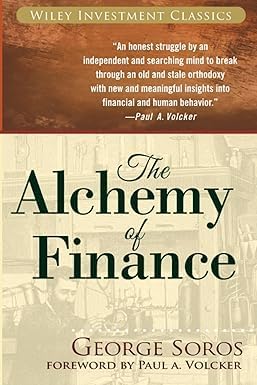
The Alchemy of Finance

Overview
The Alchemy of Finance is a well-known book on investing and financial markets that explores market behavior through the perspective of investor psychology and market dynamics. Instead of focusing only on financial statements or valuation formulas, the book discusses how market participants influence prices and how those changing prices can, in turn, influence economic fundamentals.
This title is generally best suited to readers who already have a basic understanding of investing and want to deepen their knowledge of how financial markets function.
- Covers market psychology
- Explores investment decision-making
- Discusses financial market behavior
- Includes practical observations from investing experience
- Encourages analytical thinking
- Suitable for long-term reference
- Investors
- Finance students
- MBA students
- Portfolio managers
- Business professionals
- Readers interested in financial markets
✔ Thought-provoking ideas
✔ Strong focus on market behavior
✔ Useful for intermediate and advanced readers
✔ Long-term reference value
✔ Encourages critical thinking
Finance for Non-finance Entrepreneurs: Financial Confusion to Clarity


Overview
Running a business often requires financial decision-making, even if you don’t have a formal finance background. Finance for Non-finance Entrepreneurs is written for founders, startup owners, freelancers, and business operators who want to understand the financial side of their business in practical terms.
Rather than assuming accounting expertise, the book introduces key financial concepts in an accessible way and focuses on applying them to everyday business decisions.
- Entrepreneur-focused approach
- Practical financial concepts
- Easy-to-follow explanations
- Business-oriented examples
- Beginner-friendly structure
- Real-world applications
- Startup founders
- Small business owners
- Freelancers
- Agency owners
- Students interested in entrepreneurship
- Side-hustle entrepreneurs
✔ Clear explanations
✔ Practical examples
✔ Beginner-friendly
✔ Relevant to real businesses
✔ Helps build financial confidence
Principles of Project Finance


Overview
Principles of Project Finance introduces the financial structures commonly used for large-scale infrastructure, energy, transportation, industrial, and commercial projects. The book examines how complex projects are planned, financed, evaluated, and managed throughout their lifecycle.
Because of its technical nature, it is generally intended for advanced students and professionals working in finance, banking, consulting, infrastructure, or project management.
- Comprehensive project finance concepts
- Professional reference material
- Real-world financing structures
- Risk management discussions
- Financial modeling concepts
- Long-term reference value
- Finance professionals
- MBA students
- Banking professionals
- Infrastructure specialists
- Project managers
- Investment analysts
✔ In-depth coverage
✔ Professional-level content
✔ Excellent reference material
✔ Broad industry relevance
✔ Comprehensive discussions
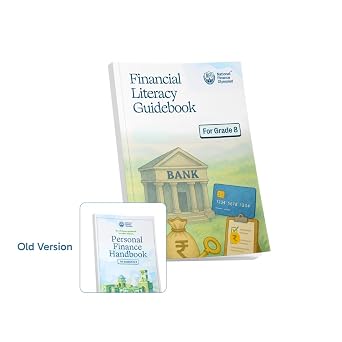
Personal Finance Handbook for Grade 8: National Finance Olympiad Book on Markets and Investing

Overview
The Personal Finance Handbook for Grade 8 is designed to introduce younger learners to the fundamentals of money management, financial literacy, and investing concepts in an age-appropriate manner. Created for students preparing for finance-related competitions or simply developing practical money skills, the book presents foundational concepts through structured lessons and activities.
It aims to help students build confidence in topics such as budgeting, saving, banking, and the basics of financial markets.
- Beginner-friendly language
- Age-appropriate explanations
- Practical financial literacy topics
- Focus on budgeting and saving
- Introduction to investing concepts
- Supports independent learning
- Grade 8 students
- School learners
- Parents teaching financial literacy
- Teachers
- Beginners exploring personal finance
✔ Easy-to-understand language
✔ Structured lessons
✔ Encourages healthy money habits
✔ Suitable for self-study
✔ Practical everyday concepts
A Dictionary of Finance and Banking


Overview
Finance and banking involve a wide range of specialized terminology. A Dictionary of Finance and Banking serves as a reference guide for students, professionals, researchers, and anyone who wants quick explanations of financial and banking terms.
Rather than teaching finance as a textbook, it functions as a companion resource that helps readers understand unfamiliar terminology encountered in finance, accounting, banking, economics, and investing.
- Alphabetically organized entries
- Comprehensive terminology
- Quick-reference format
- Suitable for students and professionals
- Useful alongside finance textbooks
- Finance students
- MBA students
- Banking professionals
- Competitive exam preparation
- Researchers
- Business professionals
✔ Excellent reference tool
✔ Easy to search alphabetically
✔ Broad topic coverage
✔ Useful for study and revision
✔ Suitable for long-term use
Python for Finance Cookbook: Over 80 Powerful Recipes for Effective Financial Data Analysis


Overview
Python for Finance Cookbook introduces practical programming techniques for financial analysis using Python. Rather than focusing solely on theory, the book presents recipe-style examples that demonstrate how programming can support financial data analysis, automation, visualization, and quantitative workflows.
It is intended for readers who already have some familiarity with Python or are comfortable learning programming concepts alongside finance.
- Practical coding examples
- Recipe-based learning
- Financial data analysis workflows
- Automation concepts
- Data visualization
- Quantitative finance applications
- Data analysts
- Finance professionals
- Students
- Python developers
- Quantitative finance learners
- Researchers
✔ Hands-on learning approach
✔ Practical examples
✔ Combines programming and finance
✔ Useful for real-world workflows
✔ Strong long-term reference
- Basic Python knowledge is helpful
- Not intended as an introduction to programming from scratch
Frequently Asked Questions
1. Which is the best finance book for beginners?
If you’re completely new to finance, start with How to Attract Money (Revised Edition) for developing healthy money habits, followed by Finance for Non-finance Entrepreneurs if you’re interested in business finance.
2. Which finance book is best for learning investing?
The Alchemy of Finance is a strong choice for readers who already understand basic finance concepts and want to learn more about investing, financial markets, and investor behavior.
3. Which finance book should entrepreneurs read?
Finance for Non-finance Entrepreneurs: Financial Confusion to Clarity is specifically designed for startup founders, freelancers, and business owners who want practical financial knowledge without a finance background.
4. Which finance book is best for students?
The Personal Finance Handbook for Grade 8 introduces financial literacy in an accessible way, while A Dictionary of Finance and Banking is useful as a long-term reference for finance students.
5. Which finance book is best for professionals?
Professionals working in banking, infrastructure, or corporate finance may benefit from Principles of Project Finance, while analysts and developers can explore Python for Finance Cookbook.
6. Can I learn finance without a finance degree?
Yes. Many introductory finance books explain concepts in simple language, making self-study possible with consistent reading and practical application.
7. Are finance books useful in 2026?
Yes. Core concepts such as budgeting, investing, cash flow, financial statements, and risk management remain relevant, although readers should supplement older books with current market information where necessary.


