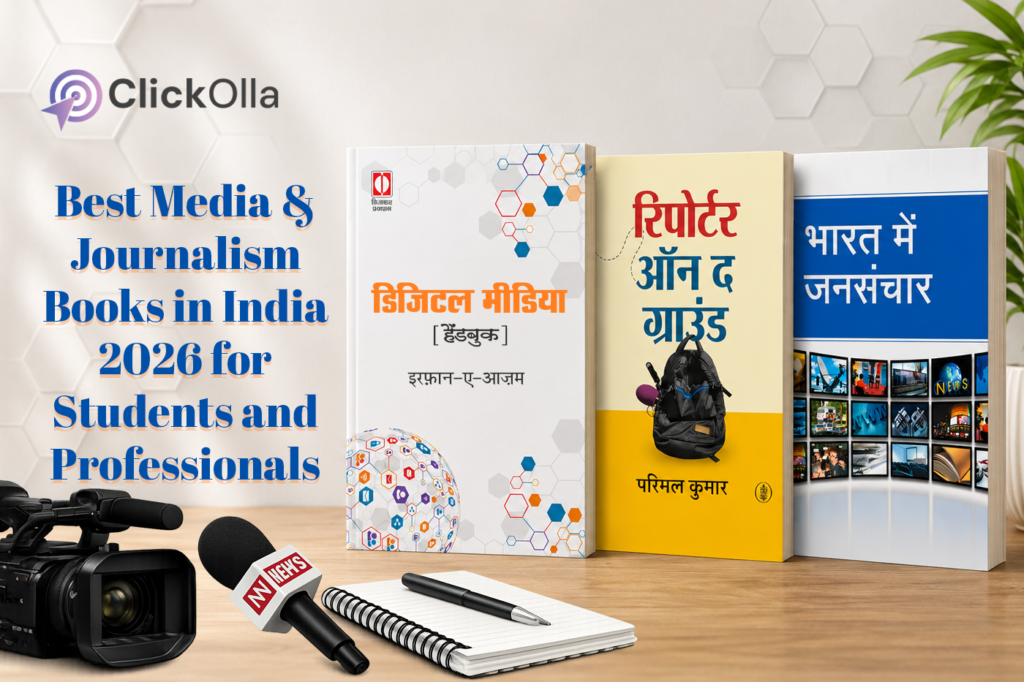
Best Media & Journalism Books in India 2026 for Students and Professionals

The media industry is evolving faster than ever before. Traditional newspapers, television channels, radio broadcasting, digital news platforms, podcasts, social media journalism, and content creation have transformed how information is produced and consumed. As a result, students and professionals entering the media field need more than theoretical knowledge—they need practical insights, industry understanding, communication skills, and exposure to modern journalism practices.

Whether you’re preparing for a journalism degree, a mass communication course, media entrance exams, competitive examinations, or planning a career in reporting, broadcasting, digital media, or content creation, choosing the right books can dramatically improve your understanding of the industry.

The challenge is that thousands of media-related books exist, but only a handful provide real-world value. Some focus on reporting techniques, while others explain communication theories, digital media trends, television production, or the social impact of journalism.

At Clickolla, we help readers discover valuable educational resources. In this guide, we’ve selected five highly relevant books covering digital media, reporting, mass communication, television language, and contemporary journalism perspectives. Together, these books provide a strong foundation for anyone serious about understanding the media landscape.

Let’s explore the best media and journalism books available in India today.

Digital Media Handbook – Irfan Azam

Overview

The Digital Media Handbook is a practical guide to understanding modern media platforms, digital communication systems, online journalism, and emerging media technologies.The future of media is digital. Journalists, marketers, content creators, and communication professionals increasingly rely on digital platforms to reach audiences.

Learn about:

  • Online news publishing
  • Digital storytelling
  • Content management
  • Audience engagement

    The book explores:

    • Social platforms
    • Digital influence
    • Content strategy
    • Media trends

    Readers gain insights into:

    • Multimedia communication
    • Digital content production
    • Emerging media tools
    • Journalism students
    • Digital marketers
    • Content creators
    • Media professionals

Reporter on the Ground – Parimal Kumar

Overview

Reporting remains the heart of journalism. This book focuses on field reporting, journalistic ethics, news gathering, and real-world reporting experiences.

Readers learn:

  • Interview methods
  • Information verification
  • Source management
  • Fact-checking

    Understanding:

    • Field journalism
    • Crisis coverage
    • Public interest reporting
    • Investigative approaches

      Helps develop:

      • Observation skills
      • Communication abilities
      • Reporting discipline
      • Journalism students
      • News reporters
      • Media trainees
      • Communication professionals

Bharat Mein Jansanchar (Mass Communication in India)

Overview

This book provides a comprehensive understanding of mass communication systems in India, making it highly useful for academic and competitive examination preparation.

Understand:

  • Communication models
  • Information flow
  • Media influence
  • Public communication

    Covers:

    • Print media
    • Broadcasting
    • Digital communication
    • Public information systems

      Frequently useful for:

      • UPSC preparation
      • UGC NET
      • Journalism entrance exams
      • University studies
      • UPSC aspirants
      • Mass communication students
      • Journalism learners
      • Hindi-medium students

Television Ki Bhasha

Overview

Television remains one of the most influential communication mediums. This book explores television language, presentation styles, visual communication, and broadcast techniques.

Topics include:

  • Broadcast language
  • Visual storytelling
  • News presentation
  • Audience engagement

    Readers gain understanding of:

    • Television scripts
    • Newsroom communication
    • Broadcast standardsProvides focused understanding of television media operations.

      Helps improve:

      • Media writing
      • Presentation skills
      • Broadcast communication

      ✘ Limited digital media coverage

      ✘ Specialized topic area

      • Television journalists
      • Anchors
      • Broadcast students
      • Media educators

Bolna Hi Hai – Ravish Kumar

Overview

Written by renowned journalist Ravish Kumar, this book offers powerful reflections on communication, journalism, society, democracy, and public discourse.

Unlike traditional textbooks, this work provides insights into journalism’s broader social responsibilities.

Explores:

  • Public dialogue
  • Communication ethics
  • Democratic values
  • Media responsibility

    Discusses:

    • Citizen engagement
    • Public communication
    • Social awarenessReaders gain a deeper understanding of journalism’s role beyond reporting.
    • Journalism enthusiasts
    • Media students
    • Social science learners
    • Readers interested in public discourse

Rich Dad Poor Dad for Teens / Young Readers Edition

Overview

Based on Robert Kiyosaki’s globally successful financial philosophy, this edition introduces young readers to concepts of wealth creation, assets, liabilities, and financial independence.

  • Assets vs Liabilities
  • Financial Independence
  • Entrepreneurship
  • Wealth Creation
  • Money Mindset
  • Investing Basics
  • Globally recognized concepts
  • Beginner-friendly explanations
  • Encourages independent thinking
  • Inspires entrepreneurship
  • Some concepts may require parental explanation
  • Less focus on budgeting basics
  • Teens
  • Young entrepreneurs
  • Parents teaching money skills
  • Students interested in business

Money Skills & Financial Education Guide for Kids

Overview

This book focuses on helping children understand the basics of earning, saving, spending, and managing money responsibly.

  • Saving Money
  • Goal Setting
  • Smart Spending
  • Budgeting Basics
  • Money Responsibility
  • Financial Planning
  • Child-friendly approach
  • Actionable lessons
  • Strong educational value
  • Supports financial confidence
  • Limited investing coverage
  • Designed primarily for beginners
  • Children ages 8-14
  • Parents
  • Teachers
  • Homeschool families

Financial Literacy Activity Workbook for Kids

Overview

Unlike traditional finance books, this workbook uses exercises, activities, quizzes, and practical challenges to teach financial literacy.

  • Saving Challenges
  • Money Games
  • Budget Exercises
  • Financial Decision Making
  • Goal Tracking
  • Money Awareness

    ✔ Interactive learning

    ✔ Keeps children engaged

    ✔ Practical skill development

    ✔ Improves retention

    • Activity-based learning
    • Fun and educational
    • Easy implementation
    • Encourages participation
    • Requires active engagement
    • Less theory-focused
    • Elementary students
    • Parents
    • Teachers
    • Homeschool programs

Children's Guide to Smart Money Habits

Overview

This book focuses on developing long-term money habits that can help children make responsible financial decisions throughout life.

  • Saving Strategies
  • Responsible Spending
  • Delayed Gratification
  • Financial Discipline
  • Money Goals
  • Smart Choices
  • Strong behavioral lessons
  • Practical examples
  • Easy reading level
  • Useful for everyday situations
  • Less advanced investing content
  • Focuses primarily on habits
  • Children
  • Parents
  • Educators
  • Financial literacy programs

Entrepreneurship & Wealth Building for Kids

Overview

This book introduces children to entrepreneurship, problem-solving, innovation, and wealth creation through business thinking.

  • Entrepreneurship
  • Business Basics
  • Innovation
  • Leadership
  • Wealth Building
  • Opportunity Recognition

    ✔ Encourages creativity

    ✔ Develops leadership skills

    ✔ Promotes entrepreneurial thinking

    ✔ Inspires business ideas

    • Future-focused content
    • Encourages initiative
    • Practical mindset development
    • Inspiring examples
    • More advanced concepts
    • Best suited for older children
    • Teens
    • Aspiring entrepreneurs
    • Business-minded students
    • Future leaders

Frequently Asked Questions

1. At what age should children learn about money?

Most experts recommend introducing basic money concepts between ages 5 and 7.

2. Are financial literacy books suitable for young children?

Yes. Many books simplify money concepts using stories, activities, and practical examples.

3. Which financial book is best for teenagers?

Rich Dad Poor Dad for Young Readers is one of the most popular options.

4. Why is financial literacy important?

It helps children develop smart money habits, avoid debt problems, and build financial confidence.

5. Can financial literacy improve future success?

Yes. Strong money management skills are closely linked to long-term financial stability and independence.

Exit mobile version