Best Finance & Business Books in India (2026)

- PublishedJuly 27, 2026
Whether you’re an entrepreneur launching a startup, a student preparing for a career in commerce, or a professional trying to improve your financial decision-making, the right books can dramatically accelerate your learning.
Finance is no longer a subject reserved only for accountants and Chartered Accountants. Every business owner needs to understand cash flow, profitability, budgeting, taxation, and financial planning. Likewise, professionals benefit from stronger financial literacy when making career decisions, managing investments, or leading teams.
Alongside financial knowledge, success also depends on developing the right mindset, understanding business fundamentals, and staying compliant with legal requirements. That is why this guide includes books covering finance, entrepreneurship, mindset, and company law.
After evaluating educational value, practical usefulness, readability, real-world applicability, and long-term relevance, we’ve selected five highly regarded books that together create a strong foundation for financial and business knowledge.
Whether your goal is starting a business, improving profitability, understanding company law, or building better financial habits, this guide will help you choose the most suitable books.
The Finance Book: Understand the Numbers Even If You're Not a Finance Professional

Overview
The Finance Book: Understand the Numbers Even If You’re Not a Finance Professional is an excellent introduction to finance for readers who don’t have a background in accounting or financial management. Rather than overwhelming readers with complex formulas and technical jargon, the book explains financial concepts using simple language, relatable examples, and practical business scenarios.
Whether you’re an entrepreneur trying to understand your company’s financial statements, a startup founder managing cash flow, a manager making budget decisions, or a student beginning your finance journey, this book provides a strong foundation.
Unlike many traditional finance textbooks that assume prior knowledge, this book is designed specifically for non-finance professionals. It focuses on helping readers develop financial confidence, understand key business metrics, and make informed financial decisions.
This book covers many of the core concepts needed to understand business finance, including:
- Reading and interpreting financial statements
- Understanding revenue, expenses, and profit
- Cash flow management
- Budgeting and forecasting
- Gross profit vs net profit
- Assets and liabilities
- Working capital
- Financial ratios
- Cost management
- Business performance analysis
- Investment decision-making basics
- Financial planning
These topics are introduced logically, making the learning process smooth for beginners.
Profit First: Transform Your Business from a Cash-Eating Monster to a Money-Making Machine

Overview
Profit First: Transform Your Business from a Cash-Eating Monster to a Money-Making Machine is one of the most influential business finance books for entrepreneurs who struggle with cash flow, profitability, and financial discipline. Written by Mike Michalowicz, the book introduces the widely recognized Profit First methodology—a simple yet powerful cash management system that challenges the traditional accounting formula.
This shift encourages business owners to reserve profit first and operate the business using the remaining funds. The idea may seem simple, but its impact can be transformative when implemented consistently.
Whether you run a startup, freelance business, agency, retail store, consultancy, or small enterprise, this book provides practical systems that help improve financial stability and long-term business sustainability.
From the opening chapters, the book immediately addresses one of the biggest frustrations faced by entrepreneurs: businesses that generate revenue but never seem to have enough cash available.
Rather than focusing on complex accounting theory, Mike Michalowicz explains why many profitable businesses still experience financial stress. His conversational writing style, relatable business stories, and actionable advice make the book engaging from start to finish.
The biggest takeaway from the first few chapters is that profitability is not something left over at the end of the month—it should be planned intentionally from the beginning.
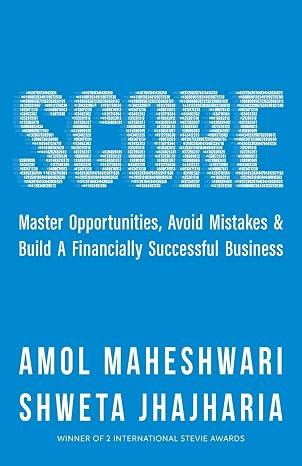
SCORE: The Fundamentals of Building a Financially Successful Business
Overview
SCORE: The Fundamentals of Building a Financially Successful Business is a comprehensive guide for entrepreneurs who want to build a profitable, sustainable, and well-managed business. Rather than focusing solely on accounting or finance, this book takes a broader approach by combining financial management, business strategy, operations, leadership, customer value, and long-term growth principles.
Whether you’re launching your first startup, expanding a family business, or improving an existing company, the book provides practical frameworks that help readers make better business decisions while keeping financial success at the center of every strategy.
Unlike many entrepreneurship books that rely heavily on motivation, SCORE emphasizes actionable business fundamentals supported by practical examples and structured learning.
The central objective of SCORE is to teach entrepreneurs how to build businesses that are financially healthy rather than simply generating revenue.
The book explains that successful businesses require more than great products or services. Long-term success depends on:
- Strong financial management
- Clear business strategy
- Efficient operations
- Customer satisfaction
- Leadership development
- Continuous improvement
- Smart decision-making
By connecting these areas together, the book helps readers understand how each element contributes to overall business performance.
You Become What You Think: Master Your Mind, Master Your Life

Overview
You Become What You Think: Master Your Mind, Master Your Life is a powerful personal development book that explores how thoughts, beliefs, habits, and daily decisions shape the direction of our lives. Unlike books that focus only on motivation, this title emphasizes developing the right mindset, building self-discipline, and creating consistent habits that support long-term personal and professional success.
The book explains that external success often begins with internal transformation. Whether your goal is building a successful business, advancing your career, improving relationships, or developing greater confidence, mastering your thinking is presented as the first step toward meaningful progress.
For entrepreneurs, professionals, students, and anyone interested in self-improvement, this book offers practical strategies to strengthen mental resilience and create lasting positive change.
The book covers a wide range of mindset and personal development topics, including:
- Positive thinking
- Self-awareness
- Building confidence
- Goal setting
- Daily habits
- Self-discipline
- Leadership mindset
- Decision-making
- Emotional resilience
- Productivity
- Overcoming fear
- Long-term success principles
Each chapter introduces practical concepts that readers can apply immediately.
Taxmann's Company Law — A Fictionalised Journey from Incorporation to Winding Up

Overview
Taxmann’s Company Law — A Fictionalised Journey from Incorporation to Winding Up – Structured Equally as a Readable Story and a Statutory Compliance Manual is a unique legal reference that combines storytelling with practical company law. Instead of presenting legal provisions as dry statutory text, the book follows a fictional business journey—from the incorporation of a company to its eventual winding up—while explaining the legal requirements that arise at each stage.
This innovative format helps readers understand not only what the law says but also when and why specific legal compliances become necessary.
Whether you’re a Company Secretary (CS) student, Chartered Accountant (CA) student, law student, entrepreneur, director, startup founder, or business owner, this book provides a practical understanding of Indian company law in an engaging and structured manner.
The book follows the life cycle of a company and explains the legal responsibilities associated with each stage.
Major stages covered include:
- Company incorporation
- Share capital
- Appointment of directors
- Board meetings
- Shareholder meetings
- Corporate governance
- Financial reporting
- Statutory compliance
- Regulatory filings
- Corporate restructuring
- Winding up
Each topic is supported by relevant legal explanations and practical guidance.
Frequently Asked Questions
1. Which is the best finance and business book overall?
Based on practicality, readability, long-term value, and real-world application:
🏆 Editor’s Choice: Profit First: Transform Your Business from a Cash-Eating Monster to a Money-Making Machine
It stands out because it:
- Introduces a practical profit management system.
- Helps improve business cash flow.
- Encourages disciplined financial decision-making.
- Is easy to implement in small businesses.
- Delivers immediate real-world value.
2. Which book is best for complete beginners?
If you have little or no finance background:
🥇 The Finance Book: Understand the Numbers Even If You’re Not a Finance Professional
It explains financial concepts using simple language and practical examples, making it ideal for beginners.
3. Which book is best for entrepreneurs?
Top recommendations:
- Profit First
- SCORE
- The Finance Book
Together, these books cover:
- Cash flow
- Profitability
- Business planning
- Financial management
- Leadership
- Sustainable business growth
4. Which book is best for startup founders?
Recommended reading order:
- The Finance Book
- Profit First
- SCORE
- You Become What You Think
- Taxmann’s Company Law
This sequence builds financial literacy before progressing into business strategy, mindset, and legal compliance.
5. Which book is best for improving cash flow?
🏆 Profit First
The book introduces a structured system for:
- Managing business income
- Allocating profit
- Planning taxes
- Controlling expenses
- Improving financial stability