Best IIBF Books in India (2026)


- PublishedJuly 20, 2026
Preparing for an IIBF certification is more than simply passing an examination—it is an investment in long-term professional development within the banking and financial services sector. Whether you are a new entrant aiming to become a Business Correspondent (BC), an experienced banker preparing for CAIIB, or a professional seeking a stronger understanding of digital banking, AML/KYC compliance, or cyber security, selecting the right study material can make your preparation more structured and efficient.
The banking industry continues to evolve with increasing digitization, regulatory updates, and changing customer expectations. Professionals are expected to understand not only traditional banking operations but also topics such as financial inclusion, fraud prevention, digital payments, data security, and regulatory compliance. Books written specifically for IIBF courses can help build this knowledge by presenting concepts in a structured format aligned with the objectives of the respective certifications.
In this guide, we compare five books that cover different aspects of banking education. Rather than recommending a single title for everyone, we explain the strengths, intended audience, and focus areas of each book so readers can choose the one that best matches their learning goals.
IIBF × Taxmann's Inclusive Banking Through Business Correspondents

Book Overview
IIBF × Taxmann’s Inclusive Banking Through Business Correspondents (Advanced Course) is designed as a learning resource for individuals working in—or preparing to work in—the Business Correspondent (BC) ecosystem. The book focuses on financial inclusion, customer service, rural banking outreach, and the operational responsibilities of Business Correspondents.
Business Correspondents play an important role in extending banking services to areas where traditional branch access may be limited. Through customer service points and assisted banking services, BCs help customers access banking facilities such as account opening support, cash transactions (where applicable), government benefit distribution, digital banking assistance, and financial awareness initiatives.
This book is intended to provide structured knowledge aligned with the objectives of the Advanced Course on Inclusive Banking Through Business Correspondents. It combines conceptual understanding with practical applications to help learners understand the responsibilities, operational processes, and customer service expectations associated with the BC role.
Inclusive banking refers to efforts aimed at making formal financial services accessible to a broader section of society, including people in rural, remote, and underserved communities.
It encompasses services such as:
- Basic savings accounts
- Deposits and withdrawals
- Fund transfers
- Government benefit distribution
- Digital payment assistance
- Financial literacy support
- Access to banking products
Business Correspondents are one of the channels used by banks to extend these services beyond traditional branches.
BC & BF Examination (MCQ with Answers): Conducted by IIBF & BFSI

Book Overview
Preparing for a professional certification examination requires more than reading theory. Regular practice with objective questions can help learners become familiar with the exam format, identify knowledge gaps, and improve time management. The BC & BF Examination (MCQ with Answers) book is designed with this purpose in mind.
Unlike theory-focused textbooks, this title emphasizes multiple-choice questions (MCQs) that allow candidates to practice concepts commonly associated with the Business Correspondent (BC) and Business Facilitator (BF) certification examinations.
The inclusion of answers enables readers to review their responses, understand mistakes, and strengthen areas that need improvement. This makes the book useful as a revision companion alongside core study material rather than as a complete replacement for comprehensive theory books.
The primary purpose of this book is to help learners:
- Practice objective questions
- Revise important banking concepts
- Improve examination confidence
- Familiarize themselves with MCQ-based assessments
- Evaluate their preparation before the actual examination
Rather than introducing entirely new concepts, practice books like this are generally most effective when used alongside comprehensive study resources.
Anti-money Laundering and Know Your Customer

Book Overview
As financial systems become increasingly digital and interconnected, banks and financial institutions face growing responsibilities to detect suspicious activities, comply with regulatory requirements, and protect the integrity of the financial system. Anti-money Laundering and Know Your Customer is a specialized banking reference book that introduces readers to the principles of AML (Anti-Money Laundering) and KYC (Know Your Customer).
The book is intended for banking professionals, compliance officers, auditors, students, and certification aspirants who want to understand customer due diligence, regulatory compliance, transaction monitoring, risk assessment, and the importance of preventing financial crimes.
Rather than focusing only on examination preparation, the book also aims to build a practical understanding of compliance concepts used across the banking and financial services industry.
Anti-Money Laundering (AML) refers to the policies, procedures, and controls implemented by financial institutions to help detect, prevent, and report activities that may involve the movement of illicit funds through the financial system.
AML frameworks are designed to:
- Reduce financial crime risks
- Protect banking systems
- Improve transparency
- Support regulatory compliance
- Promote responsible financial practices
The book introduces these concepts in a structured manner suitable for learners entering banking compliance.
Macmillan Prevention of Cyber Crimes & Fraud Management

Book Overview
With the rapid growth of digital banking, UPI payments, internet banking, mobile banking, and fintech services, cyber security has become one of the most critical areas of knowledge for banking professionals. Banks today manage millions of digital transactions daily, making cyber risk awareness and fraud prevention essential skills across customer service, operations, compliance, IT, and risk management functions.
Macmillan Prevention of Cyber Crimes & Fraud Management (Latest 2025 Edition) is designed to help readers understand the fundamentals of cyber security within the banking sector. The book covers cyber threats, fraud prevention strategies, electronic transaction security, cyber laws, and practical risk management concepts relevant to banking professionals and IIBF/CAIIB aspirants.
Rather than focusing only on technical cybersecurity, the book explains how cyber risks affect banking operations and how institutions can strengthen awareness, internal controls, and customer protection.
Modern banking relies heavily on digital platforms, including:
- Internet Banking
- Mobile Banking
- UPI
- Debit Cards
- Credit Cards
- ATM Networks
- NEFT
- RTGS
- IMPS
- Digital Wallets
As digital adoption increases, so does the need for professionals to understand cyber risks, secure banking practices, and fraud prevention measures.
Cyber awareness helps organizations:
- Protect customer information
- Strengthen transaction security
- Reduce fraud risks
- Improve operational resilience
- Support regulatory compliance
- Build customer confidence
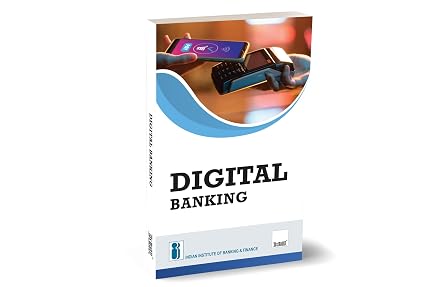
IIBF × Taxmann's Digital Banking
Book Overview
Digital transformation has fundamentally changed how banks operate and how customers interact with financial institutions. Services that once required visiting a bank branch—such as fund transfers, bill payments, account management, and loan applications—can now often be completed through digital channels.
IIBF × Taxmann’s Digital Banking is a professional learning resource designed to help readers understand the technologies, systems, and customer services that support modern banking. Developed in collaboration with IIBF and Taxmann, the book introduces digital banking concepts while explaining how technology is reshaping banking operations, customer experience, payment systems, and financial services.
Rather than focusing solely on software or programming, the book explains digital banking from a banking professional’s perspective. It aims to help readers understand digital products, payment systems, customer adoption, operational processes, cybersecurity awareness, and emerging trends such as fintech and financial innovation.
This makes the book useful for banking professionals, certification aspirants, students, and anyone seeking structured knowledge about the rapidly evolving digital banking ecosystem.
Digital banking refers to the delivery of banking products and services through electronic channels, enabling customers to access financial services without relying exclusively on physical branches.
Examples include:
- Internet Banking
- Mobile Banking
- UPI payments
- IMPS
- NEFT
- RTGS
- Digital wallets
- Online account services
- QR code payments
- Self-service banking
Digital banking combines technology, secure infrastructure, and customer-focused services to improve accessibility and convenience.
Frequently Asked Questions
1. Which is the best IIBF book overall?
Based on our editorial comparison:
2. Are these books suitable for beginners?
Yes. Most of the reviewed books are suitable for beginners or intermediate learners. Some titles, such as Cyber Crimes & Fraud Management, may be easier to understand after gaining basic banking knowledge.
3. Are these books officially published by IIBF?
Some books are published in collaboration with IIBF, while others are published by established educational publishers covering IIBF-related topics. Always verify the publisher information on the latest product listing.
4. Can these books help with IIBF certification preparation?
They are intended to support learning and exam preparation. However, no single book guarantees examination success. Candidates should also refer to the latest official syllabus and study materials.
5. Which book is best for self-study?
The IIBF × Taxmann’s Digital Banking and Inclusive Banking Through Business Correspondents books are well organized for independent learning.