x
C
Business

Best Traditional Indian Board Games in India (2026)

  • PublishedAugust 3, 2026

Traditional Indian board games have entertained families for centuries. Long before smartphones, video games, and television became household staples, games like Chowka Bara, Ashta Chamma, Pachisi, and Pallankuzhi (Mancala) brought people together for friendly competition, strategic thinking, and cultural storytelling.

Today, these timeless games are enjoying a revival. Parents are introducing them to children as educational alternatives to screen time, educators use them to encourage counting and logical thinking, and collectors appreciate their handcrafted wooden designs.

Whether you’re looking for a family game night activity, a travel-friendly board game, or a meaningful gift that celebrates Indian heritage, traditional board games offer an engaging experience for players of different ages.

This guide reviews five popular products:

  1. Chowka Bara Wooden Double-Sided Board
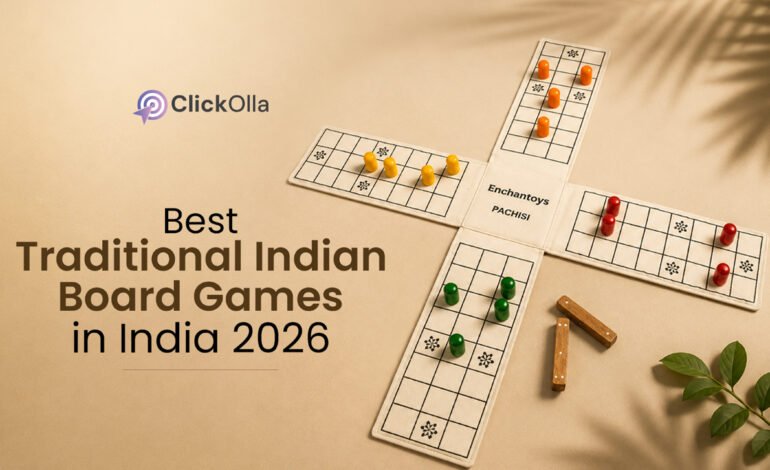
  2. Pachisi Cotton Fabric Board
  3. Vamana Guntalu / Pallankuzhi Wooden Board
  4. Ashta Chamma Cotton Travel Board
  5. Neem Wood Pallankuzhi (14 Pit)

We’ll compare their design, materials, gameplay, educational value, portability, durability, and overall value to help you choose the right game for your family.

Chowka Bara Wooden Double-Sided Board Game

Product Overview

The Chowka Bara Wooden Double-Sided Board Game is one of India’s oldest and most respected traditional strategy games. Known by different regional names such as Ashta Chamma, Katta Mane, Taayam, Kaangi Chaala, and Kaana Dua, this classic board game has entertained families for generations.

Unlike modern board games that rely heavily on cards or complex rules, Chowka Bara combines simple gameplay with strategic decision-making. Players move their pieces across the board based on cowrie shell throws while planning routes, blocking opponents, and racing toward the center.

This version features a double-sided wooden board, allowing players to enjoy both 5-house and 7-house layouts, making it suitable for beginners as well as experienced players.

In this review, we’ll evaluate its build quality, craftsmanship, gameplay, portability, educational value, durability, strengths, limitations, and overall value.

The board maintains the familiar geometric layout associated with Chowka Bara.

Its clean design allows players to focus on the game while still appreciating its traditional aesthetic.

Suitable for:

  • Family gatherings
  • Educational activities
  • Cultural events
  • Game collections
  • Gifts

Pachisi Cotton Fabric Board Game

Product Overview

The Pachisi Cotton Fabric Board Game is one of India’s most iconic traditional board games and is widely regarded as the historical predecessor of the modern game Ludo. Known by regional names such as Chausar, Chaupar, Pagade, Thayam, Dayakattam, Chopard, Chokkattan, and Parcheesi, Pachisi has been enjoyed across the Indian subcontinent for centuries.

Unlike wooden strategy boards, this version uses a foldable cotton fabric board, making it lightweight, portable, and ideal for travel. Families can easily carry it during holidays, festivals, picnics, or school activities while still enjoying an authentic traditional gaming experience.

This review covers its design, build quality, gameplay, portability, educational value, durability, strengths, limitations, and overall value.

The board features the classic cross-shaped Pachisi layout, which is familiar to players of both traditional Pachisi and modern Ludo.

Its vibrant printed design makes it visually appealing while remaining faithful to the game’s heritage.

Suitable for:

  • Family gatherings
  • School activities
  • Cultural events
  • Travel
  • Festivals
  • Educational demonstrations

Vamana Guntalu Hardwood Pallankuzhi (Mancala)

Product Overview

The Vamana Guntalu Hardwood Pallankuzhi (Mancala) 14-Pit Board Game is a beautifully crafted traditional strategy game that has been enjoyed across South India for generations. Known by various regional names such as Pallankuzhi, Pallanguzhi, Vamana Guntalu, Ali Guli Mane, and Mancala, this classic game focuses on counting, planning, and strategic decision-making.

Unlike race-based games such as Pachisi or Chowka Bara, Pallankuzhi revolves around distributing shells or seeds across multiple pits while anticipating future moves. The simple rules make it approachable for beginners, while the strategic depth keeps experienced players engaged.

This version features a hardwood 14-pit board, 70 seashells, and a storage bag, making it suitable for both home use and gifting.

In this review, we’ll evaluate its craftsmanship, gameplay, educational value, portability, durability, strengths, limitations, and overall value.

The board follows the traditional 14-pit Pallankuzhi layout, with seven pits on each side.

Its minimalist design highlights the natural beauty of the wood while maintaining the classic appearance associated with the game.

Suitable for:

  • Family game collections
  • Educational activities
  • Cultural demonstrations
  • Home décor
  • Gift collections

Ashta Chamma Cotton Fabric Board Game

Product Overview

The Ashta Chamma Cotton Fabric Board Game is one of India’s most loved traditional strategy games. Popular in Andhra Pradesh, Telangana, Karnataka, and several other regions, it is known by many names, including Chowka Bara, Katta Mane, Taayam, Kaangi Chaala, Kaana Dua, and other regional variations.

Unlike heavier wooden editions, this version uses a foldable cotton fabric board, making it easy to carry for travel, family vacations, classroom activities, and cultural events. It combines classic gameplay with modern portability, making it suitable for both first-time players and experienced enthusiasts.

Whether you’re introducing children to Indian heritage games or looking for an engaging activity during family gatherings, this travel-friendly version offers an enjoyable and authentic experience.

In this review, we’ll evaluate its design, build quality, gameplay, educational value, portability, durability, strengths, limitations, and overall value.

The board features the traditional Ashta Chamma playing layout with clearly printed paths that make gameplay easy to follow.

Its colorful design helps preserve the traditional character of the game while making it attractive for younger players.

Suitable for:

  • Family game nights
  • School activities
  • Cultural programs
  • Festivals
  • Travel
  • Indoor recreation

Vamana Guntalu / Pallankuzhi Neem Wood Board Game

Product Overview

The Vamana Guntalu / Pallankuzhi Neem Wood Board Game (14-Pit Model) is a premium version of one of India’s oldest traditional counting and strategy games. Crafted from neem wood, this board combines classic gameplay with durable construction, making it a great choice for families, educators, collectors, and anyone interested in preserving Indian cultural games.

Known by names such as Pallankuzhi, Pallanguzhi, Vamana Guntalu, Ali Guli Mane, and Mancala, this traditional game emphasizes counting, planning, and strategic decision-making rather than speed or luck.

Unlike foldable fabric games, this neem wood edition is designed for long-term use and offers a stable, premium playing surface.

In this review, we’ll evaluate its craftsmanship, material quality, gameplay, educational benefits, portability, durability, strengths, limitations, and overall value.

The board follows the traditional 14-pit Pallankuzhi layout, maintaining the classic design that has been used for generations.

Its natural wood grain gives every board a unique appearance.

Suitable for:

  • Home game collections
  • Cultural demonstrations
  • Educational settings
  • Traditional décor
  • Gift collections

Frequently Asked Questions

Which is the best traditional Indian board game?

The Chowka Bara Wooden Double-Sided Board is our top overall recommendation because of its versatile gameplay, durable construction, and cultural significance.


Which game is best for children?

Both Ashta Chamma and Pachisi are accessible choices for family play, provided children are within the manufacturer’s recommended age range and receive guidance while learning the rules.


Which game is best for developing strategic thinking?

Pallankuzhi and Chowka Bara both encourage planning, counting, and tactical decision-making.


Is Pallankuzhi the same as Mancala?

Pallankuzhi belongs to the broader family of Mancala-style games, but regional rules and board designs may differ.


Are fabric boards durable?

Yes. With proper care, cotton fabric boards can provide many enjoyable game sessions, although wooden boards generally offer greater long-term durability.


Why choose a wooden board?

Wooden boards provide:

  • Better stability
  • Premium craftsmanship
  • Longer lifespan
  • Decorative appeal
  • Collector value
Written By
artistrywander@gmail.com

Leave a Reply

Your email address will not be published. Required fields are marked *