If you record vocals, podcasts, YouTube voice-overs, audiobooks, singing covers, dubbing, or instruments from a home studio, your room can have a major effect on the final recording.
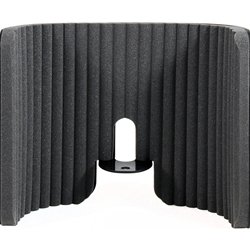
Hard walls, windows, desks, ceilings, and empty spaces can create reflections and unwanted room ambience. A microphone isolation shield—also called a reflection filter, portable vocal booth, or vocal isolation screen—is designed to reduce some of those reflections around the microphone.
A microphone isolation shield is not the same thing as soundproofing an entire room.
This is one of the most important points for buyers.
A reflection filter is generally designed to control reflections and ambience immediately around the microphone. It cannot completely eliminate:
- Traffic noise
- Loud fans
- Construction noise
- People talking in another room
- Deep bass entering through walls
The sE Electronics RF-X, for example, uses a four-layer design consisting of a vented composite outer panel, wool fabric, an air gap, and an inner acoustic foam layer. The company positions it as a portable recording solution for vocals, guitars, drums, and other sources.
Primacoustic’s VoxGuard similarly uses an ABS shell combined with 1-inch high-density open-cell acoustic foam to reduce ambience around a microphone.